AI Music: Cover & Song Maker
- 3.4
- Rating
- 500.00K
- Installs
- Free
- Price

 Analysis by App-foxy
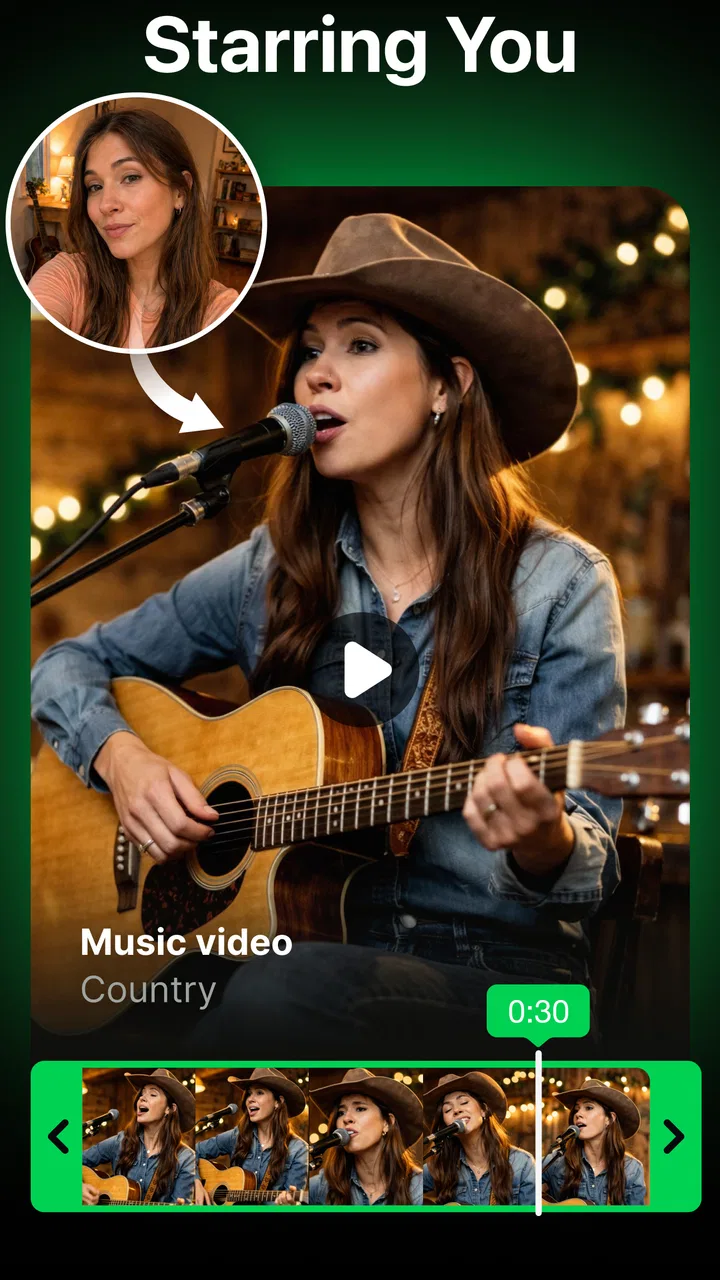
I tested AI Music: Cover & Song Maker as a quick music-creation app rather than treating it like a full recording studio. Its appeal is easy to understand: you choose a musical idea, let the app process it, and get an AI-assisted cover or song concept without spending an evening arranging tracks manually. That makes it interesting for casual creators, curious listeners, and households where several people may want to experiment on the same phone.
My experience was mixed in a useful way. The app can make the first step into music feel approachable, but the convenience also comes with trade-offs. Results depend heavily on the source material and on how much control you expect. If you want a fast creative sketch, it has a clear purpose. If you need precise vocal direction, detailed mixing, or a dependable production workflow, I would look toward a conventional music workstation instead.
Using the app on a shared household device
I’d keep a shared-device session organized around clear turns: one person chooses the musical idea, while the others listen and offer focused feedback. That makes it easier to compare attempts without confusing who is responsible for a purchase or a later sharing decision. It also sets up a useful next step: agreeing on how the household will handle the creative results once a promising version emerges.
You May Also Like

 Blood Strike: 2.5 Anniversary
Blood Strike’s Loadouts Turn Every Drop Into a Tactical Gamble
A close look at Blood Strike’s custom loadouts: how fast access to signature weapons reshapes its battle royale rhythm, rewards preparation, and narrows the gap between fights.

 Pandora - Music & Podcasts
Pandora’s Music Is Easy to Start, but Harder to Recover
Pandora’s strength is its low-effort path from a seed to a station. Its weak spot is how much confidence it asks you to place in connection, setup, and quiet recovery.

 8 Ball Pool
 Is Built on Rivalries, Rematches, and Routine
A close look at the rivalries, rematches, shared routines, and unanswered safety questions that turn a quick pool match into a persistent mobile community.

 Samsung Music
’s Quiet Strength Is Playing What You Already Own
Its reach comes less from spectacle than from dependable access to a personal library. That simplicity is both the app’s strongest retention engine and its ceiling.

 AccuWeather: Weather Radar
AccuWeather Review: A Quick, Clear Forecast for Everyday Decisions
For everyday plans, the best forecast is the one you can understand quickly. AccuWeather makes rain timing, radar, and local conditions easy to act on, with a few trade-offs.

 Hill Climb Racing
Why Hill Climb Racing Still Turns Crashes Into One More Run
A tiny car, a bumpy hill and one more upgrade: Hill Climb Racing keeps resurfacing because its simple chaos makes every near-miss feel personal.
More From Our News Desk
View All News


A simple scenario that shows where it fits
Imagine a family member has a melody in mind, another person wants to hear a different vocal style, and someone else simply wants to make a playful version of a familiar song. This is the kind of situation where the app makes sense. It turns music experimentation into something people can pass around, rather than requiring every participant to understand recording software first.
On a shared phone or tablet, I would treat each attempt as a separate creative session. One person should decide what source or idea to use, another can listen and suggest changes, and the final listener can judge whether the result feels convincing or simply entertaining. That small division of roles helps avoid the common problem where everybody edits at once and nobody remembers which version was the best.
The strongest household use is not serious collaboration in the studio sense. It is quick comparison: one approach against another, a rough demo for a friend, or a playful experiment after dinner. The app’s focus on AI-generated covers and songs keeps the process lighter than opening a multitrack editor, choosing instruments, setting levels, and learning a timeline.
There is also a practical reason to keep expectations modest. An AI cover is not automatically a finished performance. It may capture the broad idea while missing the emotional details that make a singer or arrangement convincing. I found the app more enjoyable when I listened for inspiration instead of demanding a release-ready master from every attempt.
What I would settle before handing over the phone
Because this is a music and audio app, the important household boundary is not complicated parental tooling; it is agreeing on what will be created, saved, and shared. I would decide whose material is being used, who gets to approve a result, and whether the output is only for private listening. Those conversations matter more than simply installing the app on every device.
The app is free to install, which makes trying it less intimidating. However, it includes in-app purchases ranging from $0.99 to $49.99 per item. On a shared device, I would not let a child or casual user make purchase decisions without the account holder present. A free starting point can still lead to paid choices, so the person managing the device should remain involved when the app presents an upgrade or paid creation option.
I would also avoid treating one person’s account as a communal workspace. Even when several people use the same phone, the account holder should know which creations are being made and which content may be connected to the device’s store account. A short verbal rule—ask before buying, ask before sharing, and do not overwrite someone else’s favorite attempt—prevents most household friction.
Another useful boundary is time. AI processing can encourage repeated attempts because each result invites another comparison. For a family session, I would choose a small number of ideas first, listen carefully, and only then decide whether another generation is worthwhile. That keeps the activity creative instead of turning it into endless tapping with no clear goal.
Coordinating ideas without pretending it is a full team studio
Coordination works best when one person acts as the editor and everyone else gives specific feedback. “Make it better” is not very useful. “The chorus feels more interesting than the verse” or “the vocal style does not suit this melody” gives the next attempt a clear direction, even if the app itself does not expose the same kind of detailed controls found in professional software.
I would keep a simple naming habit outside the creative process: note the song idea, the chosen style, and who approved the version. This is especially helpful when several household members use the same device. Without a basic record, a good result can become difficult to identify after a series of experiments.
A less obvious advantage of this approach is that it separates creative judgment from technical skill. A child or beginner can contribute by choosing a mood, recognizing a memorable section, or deciding which result sounds most natural. An experienced musician can focus on the musical limitations and decide whether the output is worth developing elsewhere. Everyone can participate without pretending that AI has replaced arrangement, performance, or editing knowledge.
At the same time, I would not describe the app as a replacement for shared production software. A conventional digital audio workstation is better when several people need to edit individual tracks, align parts precisely, preserve multiple takes, or control a final mix. The AI approach is faster for a first idea, while the traditional approach is slower but much more transparent and adjustable.
Age, trust, and responsible listening
The app carries an Everyone content rating, so its general positioning is suitable for a broad audience. That does not remove the need for adult judgment on a shared device. Music choices, source material, and the way a generated cover is presented can still raise questions about taste, privacy, or whether listeners might mistake an artificial performance for an original recording.
I would explain to younger users that the app creates an interpretation, not a magical replacement for the original artist. That distinction is important. It encourages curiosity while making clear that the result should not be presented misleadingly or used to embarrass another person. A generated voice or cover can be funny in a private room and uncomfortable when posted publicly without thought.
Trust also means being careful with recordings and source material. I would only use audio that the household has a legitimate reason to use and would avoid uploading another person’s private performance as a joke. The app’s creative purpose does not eliminate ordinary respect for other people’s voices, songs, or personal recordings.
For younger family members, I would sit with them during the first few sessions. The goal is not to make the app seem dangerous; it is to show how to evaluate an output. Ask whether the result actually matches the intended mood, whether the vocal sounds natural, and whether it is appropriate to share. Those questions build better habits than simply celebrating whatever the algorithm produces.
Where the app is genuinely useful
My favorite use case is turning a rough musical thought into something audible quickly. If I have a chorus idea but cannot play every instrument, an AI-assisted cover can help me decide whether the concept has enough character to pursue. It is also useful for comparing broad directions before spending time on a detailed arrangement.
Another practical workflow is using it as a presentation aid. Someone planning a small performance, writing a personal song, or preparing a creative project can make a rough audio example to communicate the intended feeling. The result does not need to be final; it only needs to make the idea easier for another person to understand.
A third use is educational listening. I would ask a beginner to compare the generated interpretation with the source and identify what changed: the vocal character, phrasing, energy, or overall mood. That turns the app from a novelty into a way of thinking about arrangement and performance. The important lesson is that a recognizable melody can feel completely different when its delivery changes.
There is a useful trade-off here: speed encourages experimentation, but speed can also discourage patience. I recommend choosing one musical question per attempt. For example, focus on whether the chorus works, whether the vocal style fits, or whether the song benefits from a different mood. This produces more meaningful comparisons than changing everything at once.
Where the experience becomes frustrating
The main limitation is control. AI generation can give you an attractive direction, but it does not necessarily give you the exact performance you imagined. If a particular syllable, harmony, instrument entrance, or vocal inflection matters, the result may feel close without being usable. That is not a defect unique to this app; it is the natural cost of asking automation to make several musical decisions at once.
I also found that repeated attempts can blur together. When the basic workflow is quick, it is tempting to judge music by instant excitement rather than by structure. A result may sound impressive for a few seconds but lose interest when you listen to the whole idea. I would always listen beyond the opening before deciding whether it deserves to be saved or shared.
People who want detailed editing should be prepared to move the best result into another tool. A traditional music editor remains the better choice for trimming with precision, balancing separate elements, recording multiple takes, or building a song from controlled layers. This app works better at the idea-generation end of the process than at the final-production end.
The purchase model is another point to consider. Since optional items can become substantially more expensive than a casual one-time experiment, I would not start creating without understanding which actions may involve payment. On a household device, that means the account owner should supervise the first use and explain the spending rule clearly.
How it compares with familiar alternatives
Compared with a standard voice recorder, this app is more imaginative because it aims to transform a musical idea rather than simply capture sound. A recorder is better when authenticity matters and you want to preserve exactly what someone sang or played. The AI approach is better when you want to explore how that idea might sound in another presentation.
Compared with a loop-based music maker, it offers a different starting point. Loop apps reward hands-on arrangement: you select parts, place them, and gradually build the track. AI Music: Cover & Song Maker reduces that manual work, which is convenient for beginners but less satisfying for someone who enjoys controlling every layer.
Compared with a professional workstation, the difference is even clearer. A workstation offers depth, repeatability, and detailed correction. This app offers immediacy. I would use the two together rather than choosing one permanently: generate or explore a direction here, then rebuild the promising idea in a more controllable environment if the project becomes serious.
That comparison also explains who should skip it. If your main goal is to learn mixing, record a carefully controlled vocal, or produce a song with exact technical specifications, start with a conventional editor. If your goal is to hear possibilities quickly and enjoy the surprise of an AI interpretation, this app is much more suitable.
What the current app details mean in practice
AI Music: Cover & Song Maker is developed by Prodfire LLC and belongs to the Music & Audio category. It was released on October 15, 2024, and the current version is 2.8.1. The app requires iOS or Android version 10 or later, so checking the shared device before planning a family session is worthwhile.
Its reach suggests that it has moved beyond being an obscure experiment: it has passed 500 thousand installs, with an average rating of 3.4 from roughly 14 thousand ratings. I read that combination as a reason to try it with realistic expectations rather than as proof that every user will get the same quality. AI music tools can feel very different depending on the source, taste, and desired level of control.
The free entry point is helpful for deciding whether the workflow suits you. I would spend time learning the basic rhythm of creating, listening, comparing, and saving before considering any paid item. That approach makes it easier to judge the app on its actual creative value instead of confusing a paid option with a guarantee of a better musical idea.
My household verdict
I recommend this app for families, friends, and solo beginners who want a low-pressure way to explore AI music together. It is particularly good for turning a vague idea into an audible sketch, comparing broad interpretations, and giving non-musicians a meaningful role in a creative session. The shared-device experience can work well when the household agrees on purchases, source material, privacy, and who has the final say before anything is shared.
I would be more cautious for children using it alone, not because the general age rating is restrictive, but because account spending and responsible use still need adult guidance. I would also skip it if your priority is exact vocal editing, professional mixing, or a transparent production process. In those situations, a conventional audio workstation will reward you more.
My final view is that AI Music: Cover & Song Maker is best understood as a creative launchpad. It makes musical experimentation faster and more social, but it does not remove the need for taste, listening, permission, or editing. Used that way, it earns a place on a shared device: not as a complete studio, and not as an automatic shortcut to a perfect song, but as an accessible way to find out which musical ideas are worth pursuing.
FAQs for AI Music: Cover & Song Maker
01What is AI Music: Cover & Song Maker, and what can I do with it?
AI Music: Cover & Song Maker is a mobile music-creation app designed for experimenting with artificial-intelligence-powered covers, song ideas, and vocal or instrumental transformations. Depending on the available tools and subscription plan, you can choose a style, provide lyrics or an audio reference, and generate a new musical result. It is mainly intended for entertainment, creative exploration, demos, and sharing—not as a replacement for a professional recording studio.
02Is AI Music: Cover & Song Maker free to download and use?
The app may be available to download at no initial cost, but some of its most useful features can require in-app purchases, credits, or a recurring subscription. Limits may apply to the number of generations, processing speed, export options, or available voices and styles. Before starting a trial, carefully check the pricing page, renewal terms, and cancellation instructions because subscriptions can renew automatically through your Apple App Store or Google Play account.
03Can I use the generated covers and songs commercially?
You should not assume that every song or cover created in the app is automatically cleared for commercial use. Rights may involve the original composition, lyrics, sound recording, performer likeness, and any AI-generated voice used in the result. Review the app’s current terms, license conditions, and the rules of the platform where you plan to publish the audio. For monetized releases, obtain permission for copyrighted material and avoid imitating a real artist without authorization.
04What audio, lyrics, or permissions are needed to create a song?
The exact requirements depend on the selected creation mode. Some tools may work from typed lyrics, while others can require an uploaded recording, a reference track, or a chosen vocal style. Use audio and lyrics that you own or are authorized to process, and avoid uploading private recordings or another person’s voice without consent. A clean recording, understandable lyrics, and a stable internet connection generally produce more consistent results.
05Does AI Music: Cover & Song Maker work offline, and what should I know about privacy?
AI generation normally requires an internet connection because audio processing is performed partly or entirely on remote servers. Processing time can vary with the length and complexity of your request, and results may not always sound identical between attempts. Before uploading vocals, lyrics, or personal recordings, read the privacy policy to understand how files are stored, processed, shared, and deleted. Also review the permissions requested by the app and grant only those you consider necessary.
Pros
- Creates AI song covers in multiple vocal styles.
- Simple interface suitable for beginners.
- Supports quick experimentation with different song ideas.
- Useful for making short clips for social media.
- Offers creative results without music production skills.
Cons
- Output quality can vary between songs and vocal styles.
- Some features may require a paid subscription or credits.
- Processing times may increase during busy periods.
- Generated vocals may sound artificial or occasionally distorted.
- Copyright rules may limit how covers can be shared or used commercially.

AI Music: Cover & Song Maker
Gallery